Rack Safety
Updated August 2026   |   Educational guide
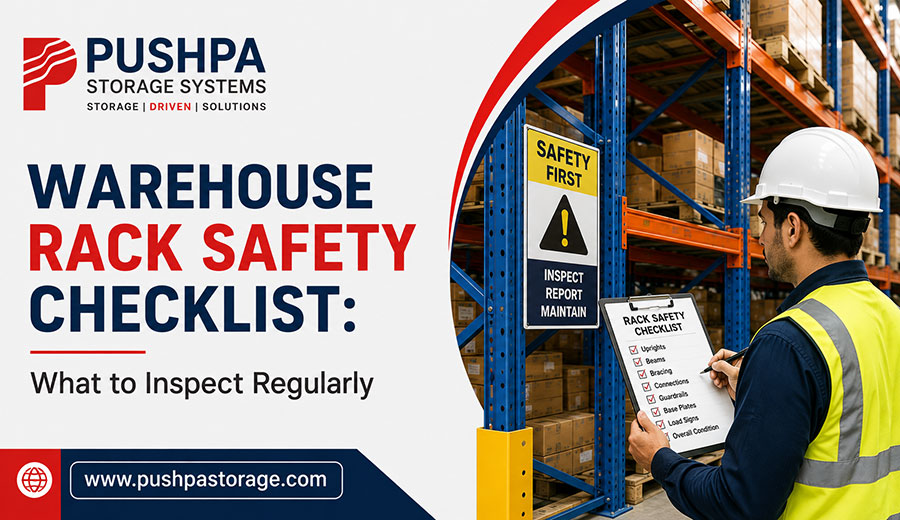
Warehouse storage racks requiring routine safety inspection and damage checks

Warehouse rack safety depends on regular attention throughout the life of the installation. Forklift impacts, changes in loading and unapproved modifications can create risks even when the original rack was correctly designed.

Operators should look for bent or damaged uprights, displaced beams, missing locking devices, loose or damaged anchors and signs of impact. Loads should stay within the engineered limits, and pallets should be in suitable condition and correctly positioned.

Warehouse Racking Planning Process

1. AssessInventory, loads & goals
2. MeasureSpace, height & aisles
3. DesignLayout & rack selection
4. InstallAnchoring & setup
5. InspectUse, review & maintain

Keep aisles and emergency access clear. Where vehicles operate close to the rack, review whether impact protection is appropriate. Any significant damage should be reported promptly and assessed by a competent person rather than improvised on site.

Inspection is not a one-time activity. A simple reporting process, visible load information and routine checks help make safe racking part of normal warehouse operations.

Planning note: Rack capacities, dimensions and layouts must be based on actual loads, site conditions and handling requirements. Obtain a project-specific assessment before installation or modification.

Frequently Asked Questions (FAQs)

Look for bent or twisted uprights, damaged beams, missing safety locks, loose anchors, impact damage, leaning frames and any visible change from the original configuration.
Restrict or unload the affected area as appropriate and have it assessed by a competent person. Do not improvise structural repairs.
Yes. Clear load information helps operators avoid unintended overloading and supports consistent use of the designed configuration.
Structural components should not be repaired or reshaped without an approved method from a competent supplier or engineer.
Good traffic planning, operator training, clear aisles, housekeeping and suitable protective measures can help reduce impact exposure.

Educational information only. Final rack capacity, layout, anchoring and structural requirements must be confirmed for the actual site and load conditions.