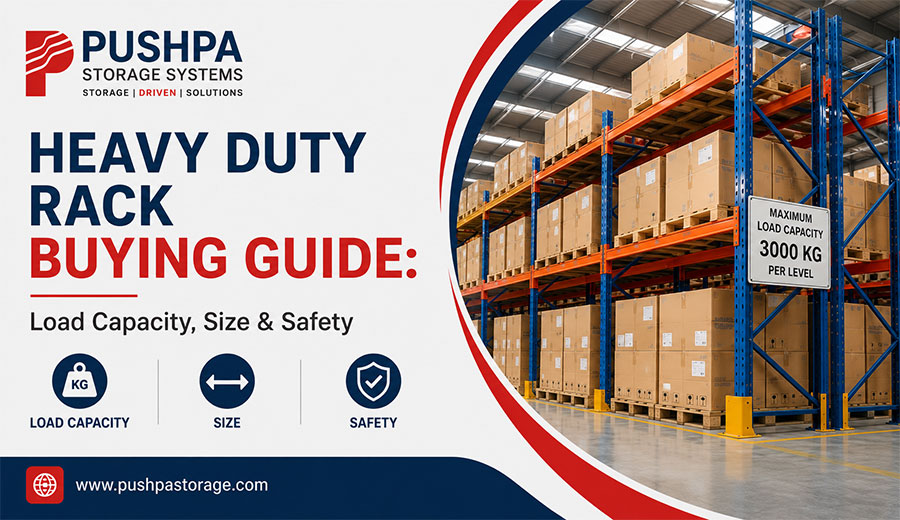
Heavy Duty Racks
Updated August 2026   |   Educational guide
Heavy duty industrial storage racks for high-load warehouse applications

Heavy duty racks are used when a warehouse needs strong, structured storage for bulky cartons, components, bins or other high-load inventory. Before requesting a quotation, define the load per level rather than only the total load you expect to store.

Rack width, depth and height should match the goods and the handling method. Oversized bays can waste space, while undersized bays can create unsafe overhang or difficult loading. The number of beam levels should also reflect both product height and the clear height available in the building.

Warehouse Racking Planning Process

1. AssessInventory, loads & goals
2. MeasureSpace, height & aisles
3. DesignLayout & rack selection
4. InstallAnchoring & setup
5. InspectUse, review & maintain

Ask how the rack is anchored and how load information will be communicated to operators. Impact-prone areas may need guards or other protection. Never assume that two racks that look similar have the same rated capacity; member sizes, steel specification, connections and layout all matter.

A useful supplier discussion should cover present inventory and expected growth. Designing only for today's stock can lead to an expensive rearrangement when volumes increase.

Planning note: Rack capacities, dimensions and layouts must be based on actual loads, site conditions and handling requirements. Obtain a project-specific assessment before installation or modification.

Frequently Asked Questions (FAQs)

Useful inputs include the load per level, product dimensions, number of levels, overall available height, loading method and any future expansion requirement.
No. Load per level is a critical design input. The rack should be selected for the actual distribution of loads across shelves or beams, not only an overall total.
Yes. Bay width, depth, height and level spacing can be configured to suit the goods and building, subject to structural design and site conditions.
Many industrial rack configurations require appropriate anchoring and installation details. The correct method depends on the system design, floor condition and application.
Operators should watch for damage routinely, with scheduled documented inspections based on site risk, traffic and the rack supplier or competent person’s recommendations.

Educational information only. Final rack capacity, layout, anchoring and structural requirements must be confirmed for the actual site and load conditions.