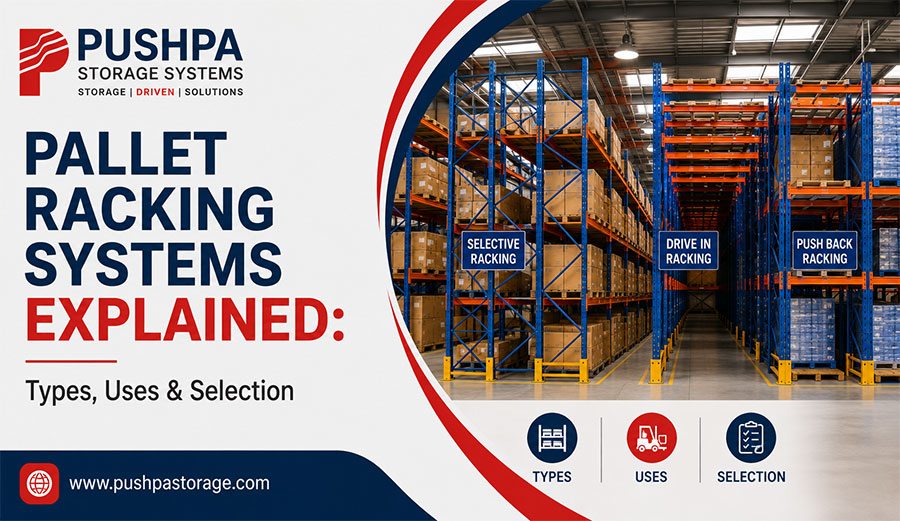
Pallet racking organizes palletised goods into defined vertical storage positions and can make stock easier to locate and handle. Selection should begin with the SKU profile and movement pattern rather than with rack appearance.
Operations with many SKUs and frequent access generally value selectivity. High-volume operations with repeated products may place more emphasis on density. Forklift type, turning radius and aisle width are therefore part of the racking decision, not separate considerations.
Warehouse Racking Planning Process
Load data must be accurate. Record the maximum pallet weight, pallet dimensions and expected load distribution. The rack should be designed for the actual operating conditions, with appropriate clearances and protection where vehicles interact with uprights.
Before installation, review floor conditions, building obstructions and fire-safety requirements. A well-planned pallet racking layout should support the whole material flow—from receiving and put-away to picking and dispatch.
Frequently Asked Questions (FAQs)
Educational information only. Final rack capacity, layout, anchoring and structural requirements must be confirmed for the actual site and load conditions.