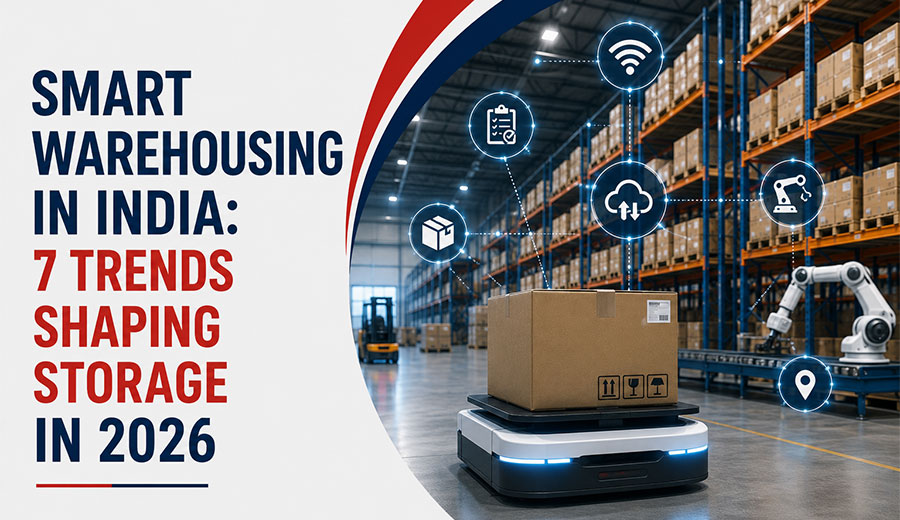
Warehousing in India is becoming more technology-driven as e-commerce, manufacturing and organised logistics expand. Seven themes are especially relevant to storage planning in 2026: automation, better data visibility, WMS integration, IoT-enabled monitoring, higher storage density, sustainability and layouts designed for future flexibility.
Automation is increasing interest in AGVs, AMRs and automated storage and retrieval. These technologies make rack precision, floor conditions and system integration more important. At the same time, warehouse management systems and connected devices are improving inventory visibility and operational decision-making.
Warehouse Racking Planning Process
Real-estate pressure is encouraging businesses to use vertical space and higher-density storage more effectively. Sustainability is also influencing warehouse design through energy efficiency, adaptable systems and longer asset life.
The practical lesson is that storage should be planned as part of the operating system of the warehouse. A rack layout that supports today's goods while allowing future technology and process changes can provide more long-term value than a design focused only on immediate capacity.
Frequently Asked Questions (FAQs)
Educational information only. Final rack capacity, layout, anchoring and structural requirements must be confirmed for the actual site and load conditions.