High-Density Storage
Updated August 2026   |   Educational guide
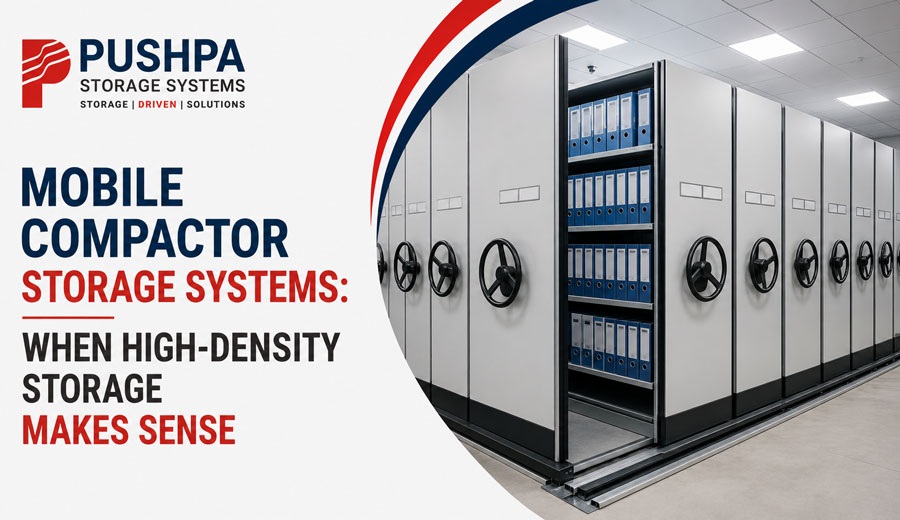
Mobile compactor storage system for high-density file and inventory storage

Conventional shelving normally requires a fixed aisle between many rows. Mobile compactor systems place storage units on movable bases so an access aisle can be opened where it is needed, allowing more of the room to be used for storage.

This approach can be valuable where floor space is expensive and simultaneous access to every aisle is not necessary. Records, files, components and selected inventory categories may benefit from the higher density.

Warehouse Racking Planning Process

1. AssessInventory, loads & goals
2. MeasureSpace, height & aisles
3. DesignLayout & rack selection
4. InstallAnchoring & setup
5. InspectUse, review & maintain

Before choosing a mobile system, consider floor loading, operating mechanism, frequency of access and how many users need to retrieve goods at the same time. High density is useful only when the access pattern supports it.

Good planning should also address aisle safety, end stops, locking or control features as applicable, and future changes in storage volume.

Planning note: Rack capacities, dimensions and layouts must be based on actual loads, site conditions and handling requirements. Obtain a project-specific assessment before installation or modification.

Frequently Asked Questions (FAQs)

It is a high-density storage system where shelving units move on guided bases so only the required access aisle is opened at a given time.
It can be useful where floor space is limited and continuous access to every aisle is not required, such as records, files, parts or selected inventory.
It can reduce the number of permanently open aisles compared with conventional static shelving, potentially increasing storage density.
Yes. Configuration depends on room dimensions, stored items, access needs and operating method.
Floor condition, track/base system, movement clearance, load, emergency access, user safety and maintenance requirements should be assessed for the site.

Educational information only. Final rack capacity, layout, anchoring and structural requirements must be confirmed for the actual site and load conditions.