Cantilever Racks
Updated August 2026   |   Educational guide
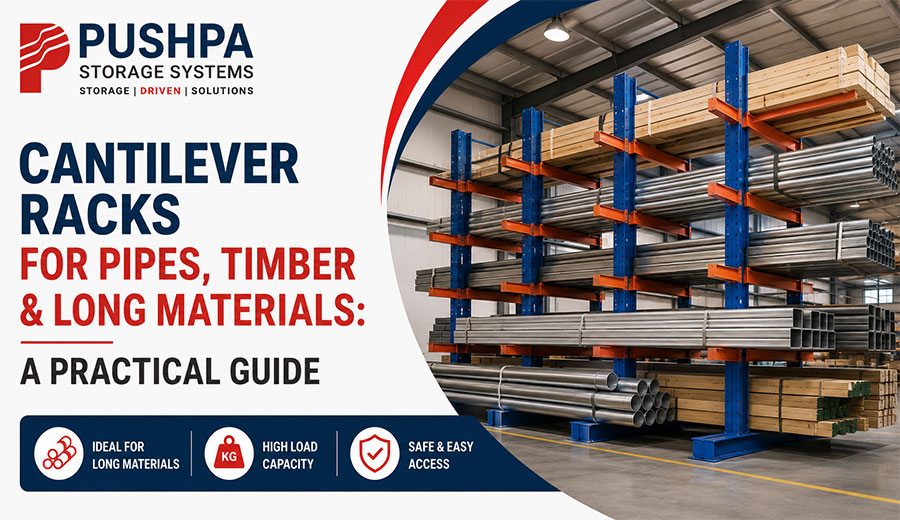
Cantilever rack system designed for long materials such as pipes timber and profiles

Long products such as pipes, bars, timber and metal profiles can be awkward to store on conventional shelving because vertical uprights may obstruct loading. Cantilever racks use projecting arms to provide open-front access for these applications.

Selection begins with the length, weight and stiffness of the stored material. The number and spacing of arms should support the load appropriately and reduce unwanted deflection. Single-sided configurations can sit against suitable areas, while double-sided systems can provide access from both sides where the layout allows.

Warehouse Racking Planning Process

1. AssessInventory, loads & goals
2. MeasureSpace, height & aisles
3. DesignLayout & rack selection
4. InstallAnchoring & setup
5. InspectUse, review & maintain

Handling method is equally important. Forklift or manual loading requirements influence aisle width, rack height and safe access. Material should be placed so that it is stable and does not create dangerous projections into travel paths.

A cantilever system should be engineered around the actual products rather than treated as a generic rack. Accurate load and dimension information is essential before design.

Planning note: Rack capacities, dimensions and layouts must be based on actual loads, site conditions and handling requirements. Obtain a project-specific assessment before installation or modification.

Frequently Asked Questions (FAQs)

Cantilever racks are useful for long or awkward goods such as pipes, timber, bars, profiles, sheets and similar materials that are difficult to store in conventional bays.
Single-sided racks are typically accessed from one side, while double-sided systems provide storage arms on both sides of the central structure.
Capacity depends on arm length, load per arm, number of arms, column design, base, bracing, material distribution and anchoring.
Many systems allow arm positions to be configured, but changes must remain within the engineered system limits and loading plan.
Record material length, bundle size, unit weight, desired stack height, handling equipment, aisle width and available building height.

Educational information only. Final rack capacity, layout, anchoring and structural requirements must be confirmed for the actual site and load conditions.